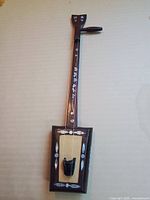
Mongolian Lute Morin Khuur 12"
This is a unique, used, Mongolian Lute Morin Khuur measuring 12 inches, featuring traditional craftsmanship with inlaid detailing.
Morin Khuur (also known as a "horsehead fiddle"), a traditional Mongolian bowed string instrument.
Here are the key features visible in the image that point to this:
Trapezoidal Body: The soundbox is a distinctive trapezoidal shape, typically made of wood.
Two Strings: It has two strings, which historically were made of horsehair (though modern ones often use nylon or other materials).
Horse Head Scroll: The top of the neck (the scroll) is carved into the shape of a horse's head. This is the most iconic feature of the Morin Khuur and gives it its name.
Long Neck: It has a long, fretless neck, allowing for the characteristic sliding notes in Mongolian music.The Morin Khuur is a very significant cultural symbol in Mongolia, often used to play traditional folk music and even to imitate the sounds of horses
This beautiful mother-of-pearl inlay on the neck of your Morin Khuur depicts a flowering plum or cherry branch.
In Central and East Asian cultures, this specific motif carries deep symbolic meaning:
Resilience and Vitality: Plum blossoms are often the first flowers to bloom, sometimes while snow is still on the ground. They represent the ability to persevere through hardship and the arrival of spring.
Aesthetic Flow: Notice how the vine-like silver or wire inlay connects the blossoms. This "flowing" design isn't just decorative; it helps the musician visually track the long, fretless neck while playing.
Craftsmanship: The use of mother-of-pearl (iridescent shell) is a traditional technique. The way the colors shift from pink to green as you move the instrument is a hallmark of high-quality decorative work.
On a fretless instrument like this, these inlays sometimes serve as subtle position markers to help the player find the correct notes, though they are primarily there for their symbolic beauty
This beautiful inlay on the back of the Morin Khuur (horsehead fiddle) depicts a peony.While the other instrument featured plum blossoms, the peony—often called the "King of Flowers"—carries its own set of distinct meanings in Asian art:
Prosperity and Honor: The peony is a primary symbol of wealth, high social status, and overall good fortune.
Feminine Beauty: In many traditions, it also represents romance and feminine grace, often acting as a "yang" (bold, bright) counterpart to the more "yin" (resilient, winter-blooming) plum blossom.
Artistic Contrast: Placing a peony on the Morin Khuur while the Shudraga features a landscape creates a nice visual variety across the set, even though they share the same dark wood and mother-of-pearl craftsmanship.
It’s a lovely touch that makes the instrument look just as impressive from the back as it does from the front
This headstock belongs to the Morin Khuur (the trapezoidal one).
While it lacks the literal horse-head carving often seen on larger, professional models, its flared "bat-wing" or crown shape is a very common alternative for travel-sized or decorative versions.
The details here confirm a few things:
Flower Inlays: The two small mother-of-pearl flowers on the headstock tie it perfectly to the floral theme seen on the neck and body of both instruments.
Tuning Pegs: You can see one of the large wooden tuning pegs clearly. On a Morin Khuur, there are typically two pegs—one for each of the two strings.
Simple Nut: The white strip where the strings cross onto the headstock is the "nut," which helps set the string height.
Looking at the holes on the side, it appears the second tuning peg is missing. This, combined with the simplified headstock shape, suggests these might be high-quality miniature models ( See next ad Shudraga (also known as a Shanz)) or souvenir instruments from Mongolia or Inner Mongolia. They are beautifully crafted and intended to capture the spirit of the full-sized versions.
Dimensions:
12"
Pickup category timeslot {A}